
LEADERSHIP & CULTURE
Can Positive Thinking Ever Be a Bad Thing?
A leader needs realism as well as positivity. Making room for difficult feelings can be the first step towards something constructive.
By Danielle Grant
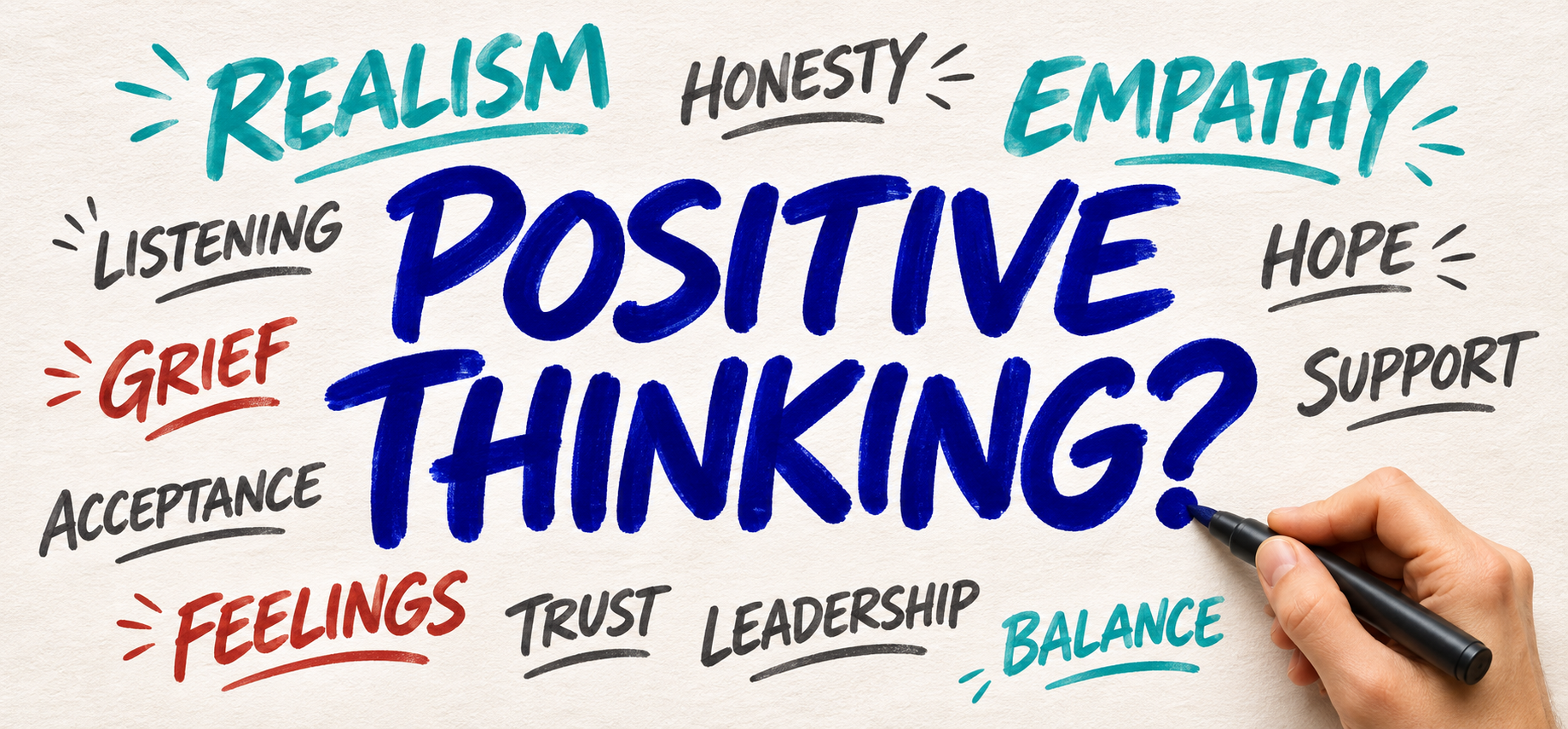
Every day we hear more and more about the power of positive thinking. Any setback, we are told, can be transformed by thinking positively and imagining successful outcomes.
We are exhorted to express daily gratitude. We are told to reframe negative thoughts and experiences into positive ones. When we have a setback, someone says, “When a door closes, a window opens.” If we experience bereavement, we may hear “time heals.” If we face serious illness, we are encouraged to keep a positive outlook.
So how can this ever be a negative thing?
When positivity becomes toxic
The book Toxic Positivity: Keeping It Real in a World Obsessed with Being Happy challenges the idea that we should maintain a positive mindset in the face of every obstacle.
Without sadness, how do we know happiness?
Without sorrow, where is joy?
Without disappointment, how do we appreciate success?
There is a great deal of pressure to look on the bright side, even when life is genuinely difficult. But our brains know when we are trying to “con” ourselves. Deep down, we know what is real. Being forced to be positive can be irritating and, at times, harmful. Sometimes a spade is a spade — not an “earth-moving implement”!
Make room for the difficult feelings
This is particularly important with grief, whether following a miscarriage, redundancy or the death of someone close. We need to allow ourselves to feel and process difficult emotions rather than beat ourselves up for not immediately flipping to the positive.
Offering upbeat platitudes when someone is having a genuinely painful experience can make them feel unheard.
Sometimes the most helpful thing a friend, colleague or coach can do is acknowledge the situation — or simply be there in silence.
We need to understand, from childhood onwards, that life is not always fair. Bad things happen, even to good people, and it is reasonable to need time to process them.
Realism and the way forward
Of course, this is not an argument for endless wallowing. There comes a point when gentle, supportive questions can help someone move forward. I particularly like:
“So what might help you move beyond where you are right now?”
That question neither demands instant optimism nor assumes that nothing can change. It leaves room for realism and for natural progress. Then, when light does begin to appear at the end of the tunnel, it can feel like emerging into full sunshine.
A coach or mentor helping someone resolve real business challenges also needs realism as well as positivity. Being honest about the difficulty is often the first step towards doing something constructive about it.
Can too much positivity actually make us less effective as leaders?
Have you ever felt pressured to be positive when what you really needed was someone to acknowledge the problem?
TAKE THE NEXT STEP
Make space for honest conversations
Leadership does not mean having a positive answer to every challenge. Sometimes it means having the space to reflect, voice concerns and consider what to do next. LeaderShape Global’s executive coaching and mentoring offers individual support and challenge to help leaders work through real leadership and organisational issues.
Explore Coaching & Mentoring →